
Increasing Access with Commuter Transportation Solutions
How transit agencies connect workers to jobs located far from where people live
Transit agencies increasingly face a growing challenge: connecting riders to workplaces located outside traditional service areas. Warehouses, military bases, and other expansive facilities are often located far from residential communities, making them difficult to serve with fixed-route transit. As commuting patterns shift and more people travel to worksites on a flexible basis, agencies are turning to targeted commuter transportation strategies to bridge the gap.
As workforce dynamics evolve, traditional transit alone can’t meet the needs of dispersed job sites and non-standard schedules. Employees today are commuting on more flexible or hybrid schedules, while employers, including warehouses and industrial facilities, operate across extended or irregular hours.
Bridging the Gap Between Where People Live and Where Jobs Exist
To address this, agencies are embracing Transportation Demand Management (TDM) strategies, focusing on how and when people travel rather than relying solely on fixed routes. Through employer outreach, agencies collaborate directly with organizations to understand commuting challenges and design tailored solutions.
Many warehouse and logistics employees work several miles away from their homes, often facing unreliable transit options. Their shifts may not align with bus schedules, and transit planning principles prioritize efficiency by concentrating limited resources in higher-density areas. As a result, single-occupancy vehicle commuting becomes the only option, which is increasingly expensive and counters the goals of the transit agency.
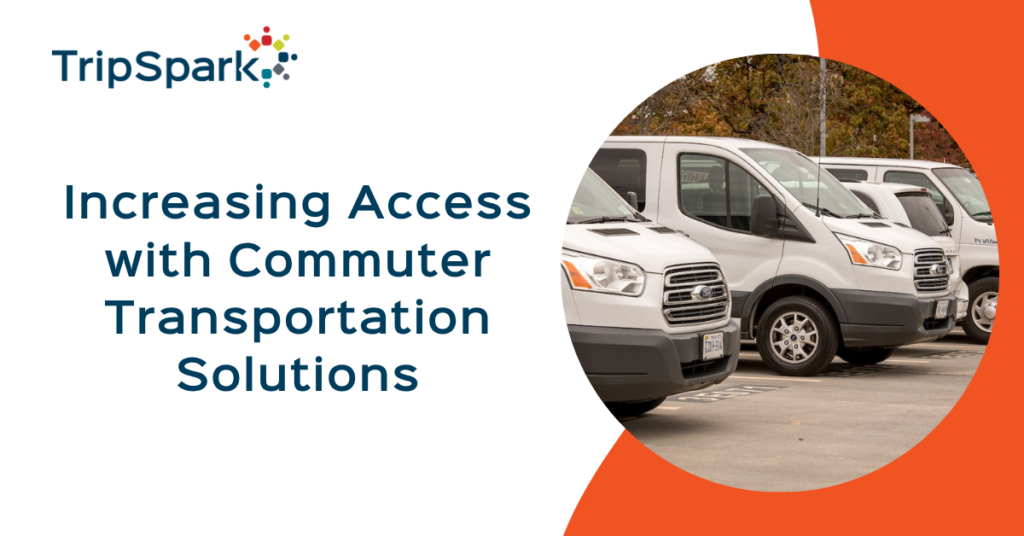
However, the situation changes for these commuters when transit agencies partner with employers to offer a vanpool program. By sharing rides with coworkers, employees can enjoy a more dependable and cost-effective commute. In turn, engaged employers can tap into a larger talent pool and significantly improve their employee retention rates. Since bus routes are not designed to serve remote locations, transit planning must focus on creating more efficient routes that serve denser areas.
Driving Program Success Through Strong Employer Partnerships
Success in these programs relies heavily on strong collaboration with key regional employers. Employers play a critical role in identifying commuter demand and promoting program participation, while transit agencies provide operational support and oversight. The outcome benefits everyone involved: employers gain improved workforce access and retention, agencies expand their reach, and riders enjoy a reliable commuting option.
An Employer Transportation Coordinator (ETC) often plays a key role in this process, helping connect workers with available options and supporting program adoption. These partnerships ensure that service aligns with real demand, improving access, reducing congestion, and supporting workforce mobility in areas where traditional transit falls short.
Expand Vanpool Programs to Broaden Transit Access
Vanpool programs are a proven, scalable way to serve underserved corridors. By grouping employees travelling along similar routes, agencies can provide flexible, shared transportation that extends beyond fixed-route boundaries.
TripSpark’s RidePro platform supports these initiatives by simplifying key program elements, such as rider matching, program communications, vanpool program management, and reporting for NTD and other KPIs. With the right technology in place, agencies can launch and scale vanpool programs more efficiently, adapting to changing commuter patterns with ease.
Conclusion: Delivering Equitable Access Through Flexible Transportation
In a tightening financial environment, transit agencies should not abandon underserved areas; instead, agencies should reimagine service delivery to expand their reach and better align with their mission to serve diverse community needs.
By investing in commuter transportation, strengthening employer partnerships, and leveraging flexible tools like vanpool programs, transit agencies can connect people to jobs that would otherwise remain out of reach. As commuting trends continue to evolve, these approaches will be essential in delivering efficient and sustainable mobility.